


Wheel Nuts, Bolts & Studs
More informationAt Global Parts, we offer a wide selection of original used car parts including wheel locks, bolts, nuts and pins for many popular car brands such as BMW, Mini, Mercedes, Audi, Volkswagen and others. The wheel locks, bolts, nuts and pins we offer undergo quality control so that you can be sure that you are getting a top-quality product.
GB
Make
Category
Subcategory
Condition
In Stock
Price
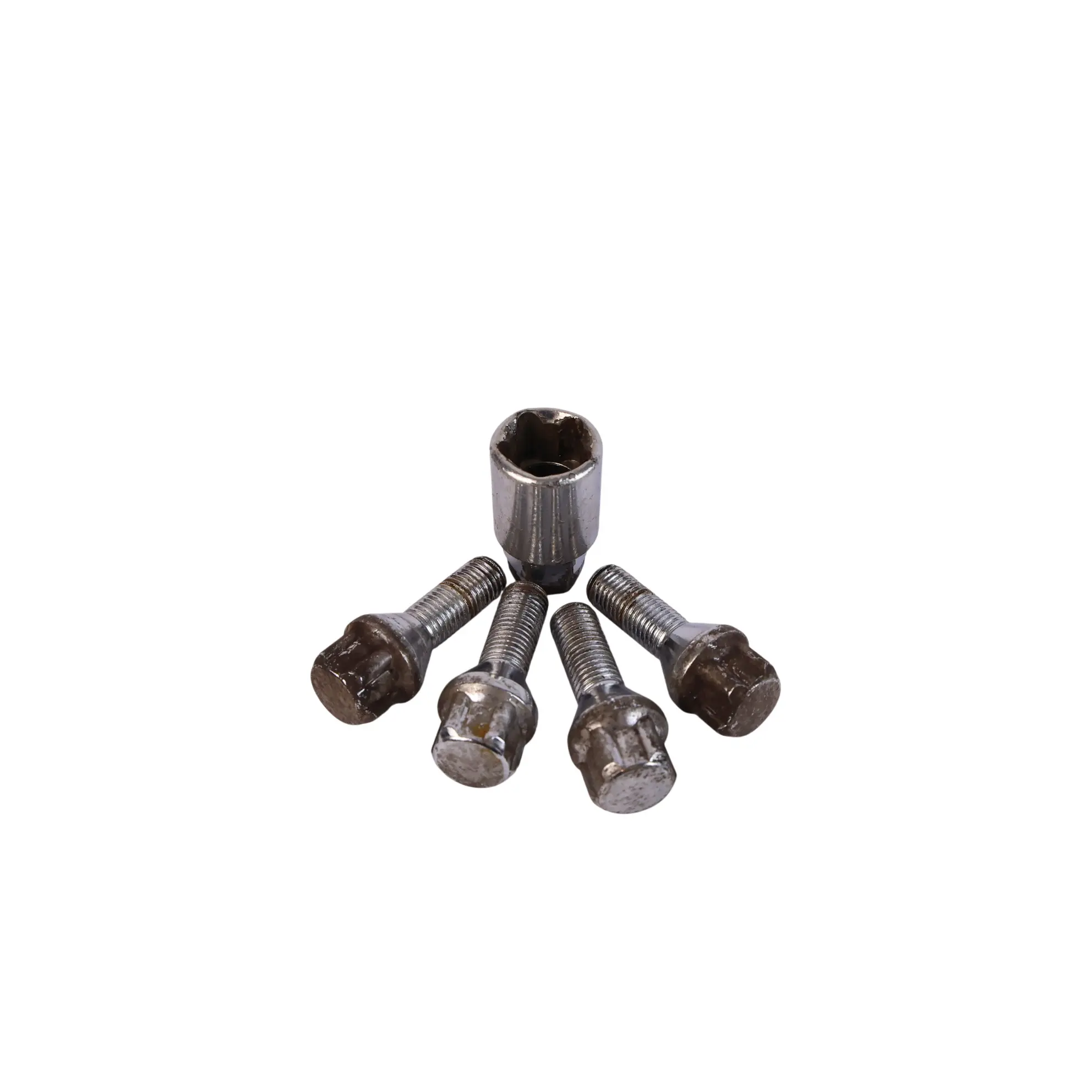
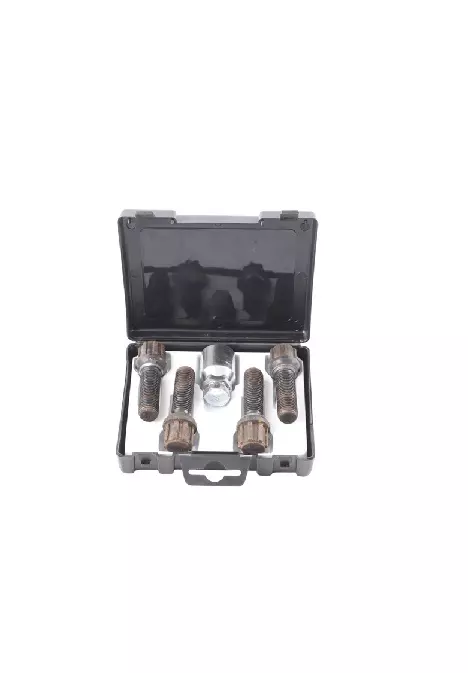
Wheel locks, bolts, and nuts for effective rim protection
Strong wheel locks and bolts for rim theft protection
Wheel locks, bolts, nuts, and studs are essential components for securing wheels to a vehicle. They ensure stable and safe wheel attachment and protect them against theft thanks to specialized locks. Their high quality directly impacts driving safety and the durability of the running gear. In the Global Parts automotive store, you will find a wide selection of used car parts, including wheel locks, bolts, nuts, and studs, ideal for brands such as BMW, Audi, Mercedes, Volkswagen, Mini, and others.
What functions do wheel locks, bolts, nuts, and studs perform?
Wheel locks, bolts, nuts, and studs play key roles in a vehicle's running gear:
- Wheel mounting – Bolts, nuts, and studs ensure a durable and stable connection between the wheels and the hub.
- Theft protection – Wheel locks protect wheels from being removed by unauthorized persons.
- Prevention of looseness – High-quality fastening elements minimize the risk of wheels becoming loose while driving.
Construction and purpose of wheel locks, bolts, nuts, and studs
Wheel locks, bolts, nuts, and studs are components that connect the wheel to the hub or the hub to the rim, depending on the vehicle's design. A typical set consists of a threaded fastener, a socket matched to a key, and a conical or spherical contact surface. A wheel lock additionally serves to limit the possibility of unscrewing the wheel without a dedicated adapter. When selecting, it is worth comparing the OEM number, thread diameter and pitch, working length, and seat type.
Comparison of wheel fastening element types
| Element type | Main function | What to check before purchase | Mounting notes |
|---|---|---|---|
| Wheel bolt | Mounting the rim directly to the hub | OEM number, thread length, head type, conical or spherical surface | Requires compatibility with the rim hole and key socket |
| Wheel nut | Mounting the wheel on a stud | Thread size, height, contact type, rim version | Used where the hub works with a protruding stud |
| Wheel stud | Creates a mounting point for a nut | Length, diameter, seating method, hub compatibility | Important for proper wheel seating and number of working threads |
| Wheel lock | Protection against unauthorized wheel removal | Socket pattern, adapter completeness, thread and seat compatibility | Should be installed in place of one standard fastening element |
Why is it worth taking care of wheel locks, bolts, nuts, and studs?
Wear or damage to these elements can lead to serious problems with the running gear and vehicle safety. Typical signs of malfunction include:
- Noise while driving – Knocking or clicking sounds may indicate looseness in wheel mounts.
- Problems with mounting or removing wheels – Worn or damaged bolts and nuts can make changing wheels difficult.
- Insufficient rim protection – Missing or faulty wheel locks increase the risk of theft. At Global Parts, you will find suitable used car parts that will help restore the full efficiency of your running gear.
The importance of proper wheel mounting in practice
Wheel mounting serves to keep the rim in a fixed position relative to the hub during acceleration, braking, and cornering. Even a small difference in bolt length, seat shape, or thread type can cause improper wheel seating. When dealing with parts like car bolts, it is worth checking not only the thread itself but also compatibility with steel or aluminum rims and the mounting location. When completing a set, elements from the Valves, nuts, and covers and Tire pressure sensors categories may also be helpful.
How to choose the right wheel locks, bolts, nuts, and studs?
When choosing wheel locks, bolts, nuts, and studs, several key aspects should be considered:
- Fitment to the vehicle model – Each wheel requires the appropriate size and type of fastening elements. In Global Parts, you will find wheel locks, bolts, nuts, and studs perfectly matched to BMW, Audi, Mercedes, Volkswagen, Mini, and others.
- Technical condition – Used elements should be free from mechanical damage, corrosion, and excessive wear.
- Type of locks and mounts – Choose elements compatible with the design of your vehicle's rims and hubs.
Selection by OEM, rim, and vehicle equipment
The OEM number is a manufacturer's designation that allows you to compare the correct variant of a bolt, nut, or stud with the factory-installed part. Interchangeable numbers, color, location on the vehicle, and rim type are also important during selection. If the car uses accessories from the Spacers and centering rings department, you must check if the bolt length remains appropriate after changing the wheel offset. In practice, it is also worth comparing the offer within Rims and tires to avoid mismatching interacting elements.
Why is it worth choosing used wheel locks, bolts, nuts, and studs?
Used car parts, such as used wheel locks, bolts, nuts, and studs, are a practical solution that allows for savings while maintaining high quality. By choosing used fastening elements, you gain:
- Lower costs – Used components are significantly cheaper than new ones but offer equally high quality.
- Ecology – Recycling car parts supports environmental protection and reduces waste.
- Wide selection – In our store, you will find used wheel locks, bolts, nuts, and studs for the most popular car brands.
Differences between a lock, a bolt, and a stud
A wheel stud is a threaded element embedded in the hub onto which a nut is screwed to secure the wheel. A wheel bolt connects the rim to the hub without a separate stud, while a wheel lock refers to a bolt or nut with a non-standard socket pattern. This makes it easier to select the right set for a specific hub, rim, and vehicle equipment design. It is also worth checking the article 5 reasons why a used OEM part is a better choice than a replacement if you are comparing OEM with universal solutions.
How to take care of wheel locks, bolts, nuts, and studs?
To ensure wheel locks, bolts, nuts, and studs work reliably for a long time, it is worth following a few rules:
- Regular inspections – Check the condition of fastening elements during periodic technical inspections and wheel changes.
- Avoid excessive loads – Excessive force when tightening can damage bolts or nuts.
- Replace damaged elements on time – Faulty mounts can lead to wheels becoming loose, which threatens safety. If you need a replacement, Global Parts offers elements that ensure durable and safe wheel mounting in your vehicle.
FAQ
| Question | Answer |
|---|---|
| What is the construction and purpose of wheel locks, bolts, nuts, and studs? | Wheel locks, bolts, nuts, and studs are elements that mount the wheel to the hub or work with the hub depending on the vehicle's design. Their construction includes a thread, a working part, a contact surface, and a socket for a tool or adapter. They are used with steel and aluminum wheels, and proper selection affects correct rim seating. In practice, you need to compare the OEM number, seat type, and compatibility with the car version. |
| What are wheel locks, bolts, nuts, and studs used for? | Wheel locks, bolts, nuts, and studs are used to securely mount the wheel and keep it in the correct position while driving. Locks limit the risk of rim removal without the appropriate key, while standard fastening elements transfer the loads acting on the wheel-to-hub connection. Their condition is important for stability, even pressure, and correct mounting during wheel changes. |
| What is the construction and function of the bolt or nut seat surface? | The seat surface of a bolt or nut is the part that comes into direct contact with the rim socket. It can be conical or spherical in shape and is responsible for the proper contact of the fastening element with the rim. Its incompatibility with the rim can cause improper pressure, centering problems, and difficulties during mounting. Therefore, besides the thread, you must also compare the seat type and the structure of the hole in the rim. |
| How to choose wheel locks, bolts, nuts, and studs for a specific car? | The safest way is to compare the OEM part number, interchangeable numbers, rim type, and mounting location. You must verify the thread diameter and pitch, working length, seat shape, and how it interacts with the hub. It is also worth considering the body version, equipment, and any spacers. |
| What symptoms indicate wear or a problem with wheel fastening elements? | Typical signs include difficulty tightening, damaged threads, noticeable looseness, and traces of improper contact with the rim. You should also pay attention to knocking from the wheel area, uneven rim seating, and problems with unscrewing the lock. In such situations, you should check the entire set of fasteners, not just a single element. |
| How to take care of wheel locks, bolts, nuts, and studs after installation? | It is worth regularly checking the condition of the thread, the key socket, and the contact surface with the rim. During seasonal wheel changes, it is good to check for signs of corrosion, deformation, and mechanical damage. You should also ensure that the lock adapter is complete and stored with the vehicle's equipment. |
Summary: wheel locks, bolts, nuts, and studs at the Global Parts automotive store
Wheel locks, bolts, nuts, and studs are key components of the running gear, responsible for wheel stability, correct rim seating, and driving safety. In the Global Parts offer, you will find used parts matched to many vehicle models from brands such as Mercedes, Audi, Unbranded, and others. When choosing, it is worth comparing the OEM number, interchangeable numbers, location on the vehicle, and rim type to select the correct mounting variant. We invite you to contact us – we are here to help! For more information and interesting facts, we also invite you to visit our automotive blog.