


Oil Coolers
GB
Make
Category
Condition
In Stock
Price
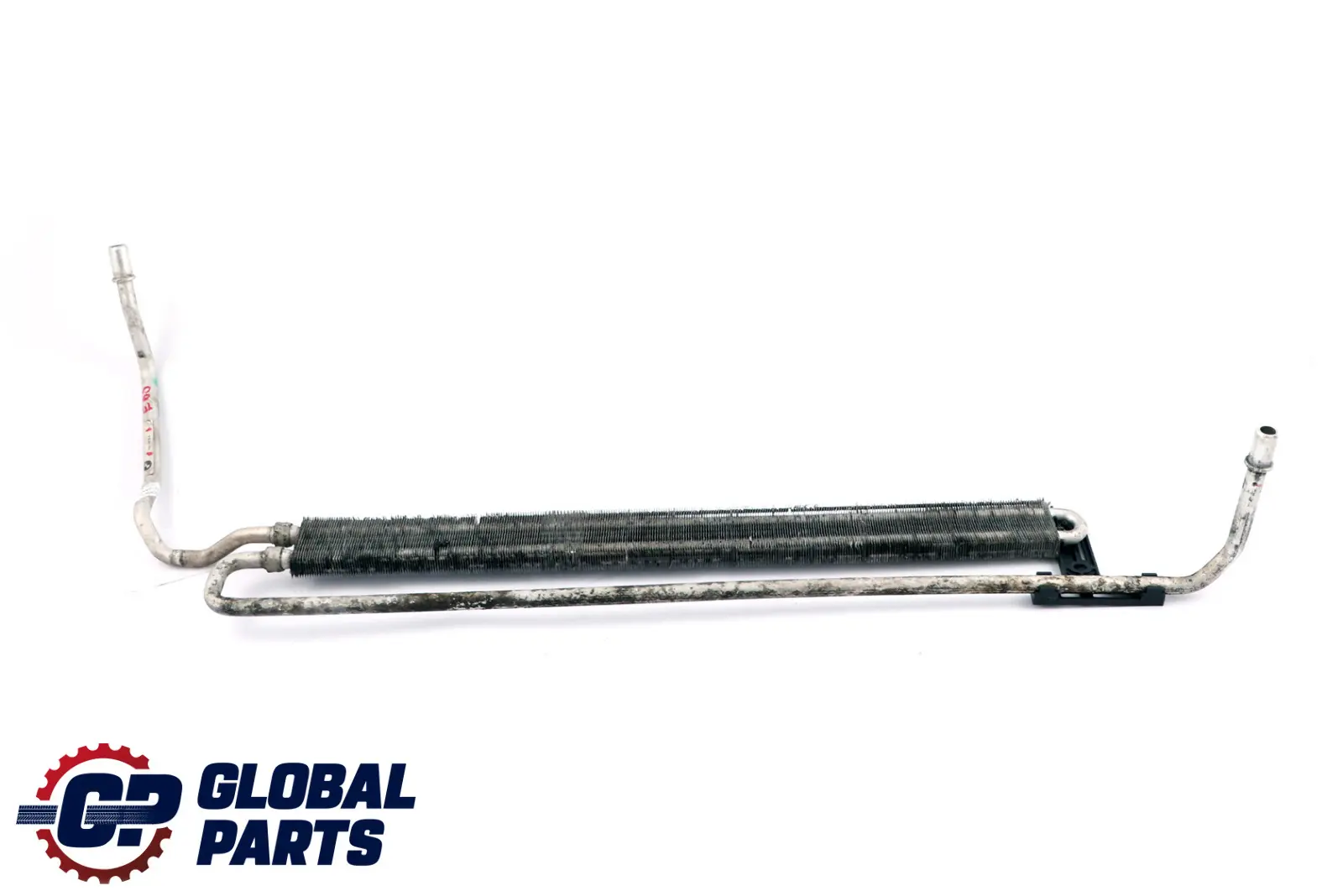
Oil Coolers
In the Global Parts automotive store, you will find a wide selection of used car parts, suitable for BMW and many other brands. Oil coolers are thermal system components responsible for maintaining the proper temperature of engine or transmission oil during daily operation. In this category, you will find components where it is worth comparing the OEM part number, interchangeable numbers, fuel type, condition, and compatibility with a specific vehicle version.
Construction and purpose of oil coolers
Oil coolers are heat exchangers mounted in the engine lubrication system or the transmission oil system. An oil cooler is used to dissipate excess heat from the working medium so that the oil maintains the appropriate viscosity and lubricating properties while operating under load. A typical component consists of a heat exchanger body, flow channels, connection ports, and mounting points, with its position depending on the car's design and the engine's auxiliary equipment. Within the engine cooling category, the oil cooler works in conjunction with other components responsible for temperature stability.
Comparison of oil cooler variants
| Variant | Location | What to check before selection | Cooperating components |
|---|---|---|---|
| Engine oil cooler | Near the engine block, filter base, or front of the car | OEM number, connection type, channel layout, engine version | Filter housing, gaskets, oil lines |
| Transmission oil cooler | Near the transmission or integrated with another exchanger | Transmission type, mounting method, hose compatibility | Oil lines, mounts, housing elements |
| Oil-coolant heat exchanger | Near the engine, in a system connected to coolant | Channel tightness, seal type, housing compatibility | hoses and lines, coolant, seals |
Function of oil coolers and symptoms of mismatch
An oil cooler is used to stabilize oil temperature in conditions where the lubrication circuit alone is not sufficient to effectively dissipate heat. Excessive oil temperature can impair its operating properties, and a leak or mismatch of the exchanger hinders the proper operation of the entire system. In practice, when selecting a part, you should check the mounting location, port layout, seal type, and hose routing. If you are looking for a component such as a BMW oil cooler, it is worth comparing the OEM number and the engine or transmission version, as visually similar elements may differ in flow channels and mounting.
Selection, installation, and cooperating components
An oil cooler gasket is a mounting component responsible for a tight connection between the exchanger and the body, filter base, or line. The gasket is used to separate oil channels and working fluids, which is why its profile, material, and compatibility with the housing have a direct impact on tightness after installation. When choosing a component such as an oil cooler gasket, you should compare the shape, contact surface diameter, and compatibility with the OEM number. When completing a repair for a specific model, e.g., BMW E90, it is also good to verify adjacent thermostats and housings, the condition of the lines, and the presence of leaks at connections.
Related components and practical compatibility check
Oil coolers often operate in the vicinity of parts responsible for air and fluid circulation, so during inspection, it is also worth assessing the condition of radiator fans and other exchangers from the radiators category. For the user, this means an easier assessment of whether the problem concerns the oil exchanger itself or the cooling support elements. Additional supplementary material is the article Transmission: manual, automatic or DSG – typical faults and a guide to buying a used transmission, which helps to better understand the relationship between oil temperature and transmission operation.
FAQ
| Question | Answer |
|---|---|
| What is the construction and purpose of oil coolers? | Oil coolers are heat exchangers mounted in the engine or transmission oil system. A typical element consists of a body, flow channels, connections, and mounting points adapted to a specific car version. Their purpose is to lower the oil temperature and maintain stable operating conditions for the lubricated components. |
| What are oil coolers used for? | Oil coolers are used to dissipate excess heat from the oil, which heats up under load during engine or transmission operation. As a result, the oil retains its proper viscosity and lubricating ability for longer. This component also affects the stability of the system during highway driving, city driving, and under higher thermal loads. |
| What is the construction and function of an oil cooler gasket? | An oil cooler gasket is a sealing element mounted between the exchanger and the contact surface, such as the filter housing or engine block. Its task is to maintain the tightness of oil channels and separate the medium from the environment. In practice, one must pay attention to the gasket profile, material, and compatibility with a specific OEM number. |
| How to choose an oil cooler for a specific vehicle version? | When selecting, it is best to compare the OEM part number, interchangeable numbers, fuel type, and mounting method. The engine version, transmission type, and hose connection layout are also important. In many cases, it is worth additionally verifying the part by VIN or based on markings from the removed element. |
| What symptoms may indicate a problem with the oil cooler? | The need for inspection may be indicated by oil leaks at connections, traces of dirt around the exchanger, or problems with operating temperature stability. Leaks at ports or seals are also significant signals. Symptoms should be assessed together with the condition of lines, mounts, and cooperating elements. |
| Which cooperating elements should be checked during oil cooler installation? | During installation, it is worth checking the condition of lines, gaskets, mounting points, and contact surfaces. The flow of the system and the absence of deformations at the connection ports are also important. If the oil cooler works with another exchanger or housing, you should compare the completeness of the set and the compatibility of all connections. |
Summary: oil coolers at the Global Parts automotive store
Oil coolers are important components responsible for maintaining the proper oil temperature and the correct operation of the lubrication system or transmission. In the Global Parts offer, you will find used parts for many models, including BMW vehicles and others, and when choosing, it is easy to compare data such as the OEM number, interchangeable numbers, fuel type, or the condition of the element. We invite you to contact us – we are here to help you! For more information and interesting facts, we also invite you to visit our automotive blog.