


Crankshafts
More informationAt Global Parts, we offer a wide selection of original used car parts, including crankshafts for many popular car brands such as BMW, Mini, Mercedes, Audi, Volkswagen, and others. Each crankshaft we offer undergoes quality control to ensure you receive a top-quality product.
GB
Make
Category
Subcategory
Timing Components & Kits
Condition
In Stock
Price
No search results
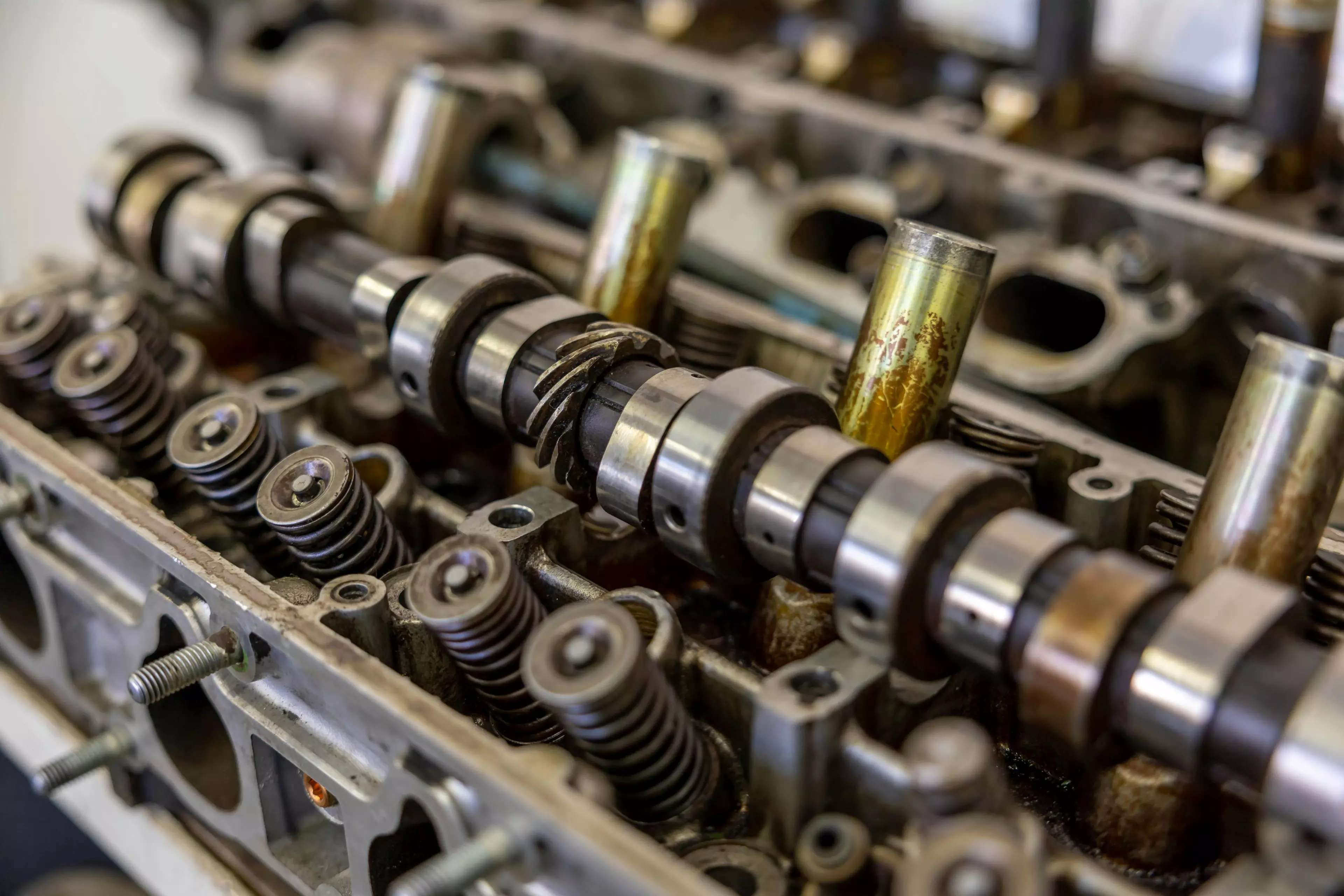
Wide selection of crankshafts – BMW, Audi, Mercedes, Volkswagen, and more
How to choose the correct crankshaft for your vehicle?
A crankshaft is one of the most important components of any engine, responsible for converting the reciprocating motion of the pistons into the rotational motion that drives the vehicle's wheels. Its precision and durability have a direct impact on engine performance and longevity. In the Global Parts automotive store, you will find a wide selection of used car parts, including crankshafts tailored for brands such as BMW, Audi, Mercedes, Volkswagen, Mini, and others. Crankshafts used in brands such as BMW, Audi, or Mercedes differ in design depending on the engine generation, journal diameter, and number of cylinders. For example, the BMW N57 crankshaft used in 3.0d units weighs approximately 22–24 kg and features a specific crank geometry adapted for high torque exceeding 560 Nm. In turn, the M54B30 crankshaft is a lighter construction designed for the naturally aspirated 3.0 R6 unit, with operating torques around 300 Nm. Thanks to these differences, the crankshaft ensures optimal fit to the engine's characteristics, and its compatibility with accessories (pulley, bearings, position sensor) is crucial for the proper operation of the unit.
Construction and significance of the crankshaft
A crankshaft is an engine component that performs several key functions:
- Energy conversion – it transforms the linear motion of the pistons into rotational motion, which is transmitted to the drivetrain.
- Force distribution – the crankshaft balances the forces generated during engine operation, ensuring smooth performance.
- Accessory drive – through connections with belts and pulleys, the crankshaft drives other systems, such as the alternator or water pump. Precise manufacturing of the crankshaft and its proper lubrication are crucial for reliable engine operation.
Construction and purpose of crankshafts
Crankshafts are basic mechanical components mounted in the lower part of the engine, inside the block, on main bearings. Their task is to receive force from the pistons via connecting rods and convert reciprocating motion into rotational motion. A typical shaft consists of main journals, crank journals, counterweights, a front journal for the pulley, and a rear end that works with the flywheel or dual-mass flywheel. Crankshafts can be forged or cast. Forged shafts, used in more powerful BMW variants (e.g., N57S), are characterized by greater torsional resistance and work with higher maximum combustion pressures. Cast shafts (popular in, for example, 1.6–2.0 VAG group engines) are lighter and cheaper, making them ideal for units with lower dynamic loads. In practice, both types ensure proper engine operation, provided they are correctly matched to the design of the given model.
Comparison of crankshaft variants and data to check
| Variant | Characteristics | Cooperating elements | What to check before purchase |
|---|---|---|---|
| Forged shaft | Used in units with higher loads and greater torque, usually with increased torsional resistance. | Main and connecting rod bearings, pulley, flywheel, seals. | OEM number, engine code, journal diameters, condition of working surfaces, compatibility with power version. |
| Cast shaft | Found in many mass-produced petrol and diesel units, selected for specific block and accessory designs. | Connecting rods, bearings, position sensor, pulse wheel, seals. | Fuel type, OEM part number, arrangement of sensor interaction points, year compatibility. |
| Shaft for a specific engine version | May differ in the number of throws, journal dimensions, and accessory mounting details depending on the unit generation. | Engine block, oil pump, timing, dual-mass flywheel or clutch. | VIN, interchangeable numbers, gearbox version, compatibility with engine blocks. |
How to properly select a crankshaft for your vehicle?
The process of selecting a crankshaft can be presented in four simple stages:
- Identification of the power unit – the most important thing is the engine code, e.g., N57D30A, M54B30, or OM651 in Mercedes.
- Analysis of technical parameters – length of crank arms, diameter of main journals, number of throws.
- Accessory compatibility – matching with the dual-mass flywheel, sealing rings, and sensors.
- Verification of mounting fit – shafts differ depending on the year, power version, and gearbox (e.g., ZF automatic vs manual). This ensures precise selection and allows for the installation of the correct model, such as the BMW E46 crankshaft, which appeared in several engine versions with different journal diameters.
Selection, compatibility, and cooperating elements
Crankshaft selection should be based on the OEM number, interchangeable numbers, and the exact designation of the power unit. The crankshaft works directly with engine, main, and connecting rod bearings, connecting rods, the flywheel, and seals, so compatibility must include not only the journal dimensions but also the way it interacts with other parts. When choosing an element like a crankshaft position sensor, you must additionally compare the position of the signal wheel and the housing version, as this affects the shaft position reading.
Why is it worth taking care of the crankshaft?
The crankshaft is constantly exposed to high mechanical and thermal loads, which makes regular inspection and maintenance essential. Neglecting this component can lead to:
- Engine damage resulting from excessive friction or overheating.
- Uneven engine operation, power loss, and increased fuel consumption.
- Serious failures that may require costly replacement of the entire drivetrain. At Global Parts, we offer original used crankshafts that have undergone detailed quality tests, ensuring their full functionality. Modern crankshafts operate at speeds reaching up to 6,000–7,000 rpm in R6 engines and over 4,000 rpm in diesel units. The surface of the main journals is induction-hardened, reaching a hardness of up to 55–60 HRC, which allows for many years of operation. Proper lubrication maintains an oil film only 0.02–0.05 mm thick, which protects against friction and maintains the stability of the shaft's operation.
The role of lubrication and bearings in crankshaft operation
Crankshaft bearings are precision sliding elements that separate the shaft journals from the seats in the block and connecting rods with an oil film layer. Their task is to reduce friction, maintain rotational alignment, and absorb loads generated during piston operation. Therefore, during an overhaul, it is worth assessing the condition of cooperating connecting rods and parts, as well as verifying the lubrication flow and compatibility with oil pumps and parts.
How to choose the right crankshaft?
When choosing a crankshaft, pay attention to several key factors:
- Compatibility with the vehicle model – every engine has unique design requirements. At Global Parts, you will find crankshafts matched to BMW, Audi, Mercedes, Volkswagen, Mini, and others.
- Technical condition – a used crankshaft should be free of cracks, signs of wear, and deformations.
- Operational history – it is important that the shaft comes from a vehicle with a known service history, which guarantees its durability.
Table of parameters and compatibility
Below are examples of differences between popular crankshafts used in BMW:
| Engine model | Example shaft weight | Material | Type | Compatibility with models |
|---|---|---|---|---|
| M54B30 | approx. 20–21 kg | Cast steel | cast | BMW E46, E39, E60 (3.0 R6) |
| N57 3.0d | 22–24 kg | Forged steel | forged | BMW F10, E70, F01 (3.0d) |
| N57S (M550d) | approx. 25 kg | Reinforced forged steel | forged | Special M Performance versions |
Why choose used crankshafts?
Used car parts, such as crankshafts, are an excellent solution combining savings with high quality. By choosing used crankshafts, you gain:
- Lower costs – used components are significantly cheaper than new ones but offer equally high quality.
- Ecology – recycling car parts helps reduce automotive waste.
- Wide selection – in our store, you will find crankshafts for the most popular car brands. Used crankshafts, such as those offered at Global Parts, come from fully functional power units and are checked for straightness, journal tolerances, and compatibility with standard or oversized bearings. Such shafts may have micron-level wear differences – standard tolerances are 0.01–0.03 mm, which still falls within the factory operating parameters of many units. Thanks to this, they are a fully functional and economical solution.
How to take care of the crankshaft?
To ensure the crankshaft works reliably for years, it is worth following a few rules:
- Regularly change engine oil and filters to ensure proper lubrication.
- Check the condition of the crankshaft bearings to prevent excessive wear and vibration.
- Monitor the tension of drive belts, which can affect the shaft's operation. If you need to replace a crankshaft, at Global Parts you will find suitable used auto parts that will restore your vehicle to full efficiency. The durability of the shaft is also influenced by the proper matching of other system elements: the oil pump, lubrication channels, and main bearings. In some engines – like the BMW N57 – a variable displacement oil pump is used, which adjusts pressure to the load. In M54 units, the correct operation of the oil separator is crucial, as it maintains stable lubrication at high speeds. Thanks to this, the crankshaft operates under optimal conditions.
FAQ
| Question | Answer |
|---|---|
| What is the construction and purpose of crankshafts? | Crankshafts are mechanical components mounted in the lower part of the engine, supported by main bearings in the block. They consist of main journals, crank journals, counterweights, and surfaces interacting with the flywheel and pulley. Their purpose is to convert piston motion into rotational motion and transfer loads generated during mixture combustion. |
| What are crankshafts used for? | Crankshafts are used to transfer energy from the piston-connecting rod assembly to further elements of the drivetrain. In addition to generating rotational motion, they work with the timing system, belt accessories, and the flywheel. Without a properly selected shaft, the engine does not maintain proper operating culture, lubrication, and mechanical synchronization. |
| What is the construction and function of crankshaft bearings? | Crankshaft bearings are thin-walled sliding elements mounted between the shaft journals and the seats in the block or connecting rod. Their function is to maintain an oil layer, reduce friction, and stabilize the operation of the rotating shaft. The selection of bearings depends on the journal diameter, any potential grinding, and the engine version, so they should be verified together with the shaft. |
| How to properly select a crankshaft for a specific engine? | The most important thing is to compare the engine code, OEM number, and interchangeable numbers. It is also worth checking the fuel type, part condition, gearbox version, and compatibility with the flywheel or dual-mass flywheel. For units after an overhaul, the journal dimension and whether the shaft works with standard or oversized bearings also matter. |
| What symptoms may indicate a problem with the crankshaft or its interaction? | Typical symptoms include metallic knocking from the lower part of the engine, excessive vibration, oil pressure drop, and uneven unit operation under load. In practice, the cause may be the shaft itself, worn bearings, improper lubrication, or a problem with the position sensor signal wheel. Therefore, it is worth basing the diagnosis on measurements and part compatibility, not just on a single symptom. |
| How to take care of crankshafts after installation? | The basis is regular oil and filter changes, monitoring lubrication pressure, and using the correct mounting elements. After installation, you should verify alignment, operating clearance, and interaction with seals, the pulley, and the flywheel. It is also good practice to check the condition of the oil pump and oil channels before starting the engine. |
Summary: crankshafts at the Global Parts automotive store
Crankshafts are a fundamental element of every engine, affecting its performance, durability, and reliability. The Global Parts offer includes used parts for many power units, including solutions tailored for brands such as Mercedes, Audi, BMW, and others. When choosing, it is worth comparing the OEM part number, interchangeable numbers, technical condition, and compatibility with the engine code and cooperating accessories. We invite you to contact us – we are here to help! For more information and interesting facts, we also invite you to visit our automotive blog.