


Charging Cables
More informationAt Global Parts, we offer a wide selection of original used car parts, including charging cables for many popular car brands such as BMW, Mini, Mercedes, Audi, Volkswagen and others. The charging cables we offer undergo quality control so that you can be sure that you are getting a top-quality product.
Find it faster
Match to your vehicle
GB
Make
Category
Subcategory
Charging Units
Drivetrain Motors & Parts
Condition
In Stock
Price

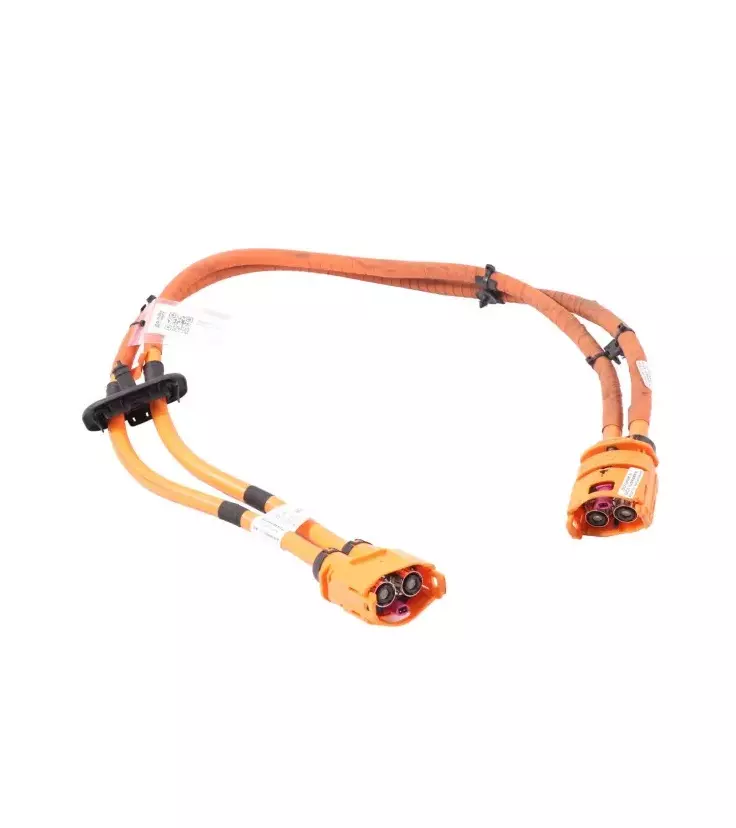
EV charging cables for fast and safe charging
Safe charging cables for efficient electric vehicle powering
Charging cables are essential accessories for hybrid and electric vehicles, enabling safe and efficient energy replenishment for batteries. Properly selected and functional cables ensure fast charging and compatibility with various charging stations. In the Global Parts automotive store, you will find a wide selection of used car parts, including charging cables, perfectly matched to brands such as BMW, Mercedes, Mini, and others.
What functions do charging cables perform?
Charging cables are essential for the daily use of hybrid and electric vehicles, serving key roles:
- Electrical energy transmission – They enable the transfer of energy from the power grid to the vehicle's battery.
- Safety assurance – They are equipped with advanced protection systems against overheating, overvoltage, and short circuits.
- Compatibility with various charging stations – They support different charging standards, such as Type 1, Type 2, or CCS.
- Support for fast charging – Specialized cables allow for high-power charging in a shorter time. Used car parts, such as charging cables, offer an economical solution for owners of electric and hybrid vehicles.
Construction and purpose of charging cables
Charging cables are components that connect the vehicle to an energy source, installed and used between the charger socket and the car's charging port. A typical set consists of a cable with an appropriate cross-section, plugs on both sides, insulating covers, and protective elements that shield the contacts from moisture and dirt. Charging cables are used for stable energy transmission and to maintain compliance between the car and the charging point.
Comparison of charging cable variants
| Variant | Application | What to check before purchase |
|---|---|---|
| Type 1 cable | Older or selected versions of electric and plug-in hybrid vehicles | Connector type on the car side, compatibility with the station socket, OEM number |
| Type 2 cable | Most common European electric and hybrid cars | Plug type, number of pins, supported charging power, insulation condition |
| Cable with additional covers and caps | Daily use in changing weather conditions | Seal tightness, contact condition, completeness of ends and transport mounts |
Why is it worth taking care of charging cables?
Functional charging cables are crucial for the safety and efficiency of vehicle charging. Typical problems include:
- Insulation damage – Abrasions or cracks can lead to loss of conductivity and electrical hazards.
- Contact contamination – Dirt or corrosion on the connectors can reduce energy transmission efficiency.
- Improper operation of protection systems – Damage to safety mechanisms can increase the risk of short circuits or overheating.
- Compatibility issues – Improperly selected cables may not fit the charging station or the vehicle. If replacement is necessary, choose used car parts that ensure durability and safety.
Charging cable function and the importance of compatibility
Charging cables are used to transfer energy in a controlled manner, maintaining the parameters required by the vehicle and the station. Their role is not limited to just connecting plugs, as proper operation is also determined by the condition of the pins, the type of connector, and compatibility with the car's equipment. When completing a repair for a specific model, e.g., BMW E90, it is worth checking the OEM number and interchangeable numbers of electrical equipment parts to avoid selection errors.
How to choose the right charging cables?
- Vehicle model matching – At Global Parts, you will find charging cables perfectly matching BMW, Mercedes, Mini, and others.
- Technical condition – Used charging cables should be free from mechanical damage, such as abrasions or contact contamination.
- Charging standard – Choose cables compatible with the connector type in your vehicle (e.g., Type 1, Type 2, CCS).
- Charging power – Ensure that the cable supports the appropriate charging power adapted to the vehicle's needs. Auto parts, such as charging cables, must be precisely selected to ensure charging efficiency and safety.
Practical criteria for selecting charging cables
The selection of charging cables should be based on data that can be compared in the product listing: brand, fuel type, condition, OEM part number, and interchangeable numbers. The charging connector refers to the working end of the cable, which must correspond to the vehicle and charger standard, and its shape, pin layout, and housing affect proper connection. When choosing a component like a BMW F30 steering wheel, buttons and connector types are compared; similarly, for charging cables, one must verify the plug standard, usable length, and compatibility with the car version.
Components working with charging cables
Charging cables work with the vehicle socket, the station port, and accessories for cable storage and management. A cable holder is an auxiliary element that stabilizes the cable after charging is finished and reduces the risk of kinks at the connector. If a component like an Audi A3 8P rear bumper is sought, mounts and body compatibility are checked; for cables, contact points, end covers, and storage methods are equally important, which is why charging cable and connector holders, charger carrying bags, and selected charging adapters are helpful. Additionally, it is worth checking the article Bodywork and exterior – post-accident repairs using dismantled parts if you are also completing other vehicle equipment elements.
How to maintain charging cables?
- Regular inspection – Check the condition of insulation and connectors to detect any damage.
- Connector cleaning – Remove dirt and corrosion from contacts to ensure reliable energy transmission.
- Storage in proper conditions – Protect cables from moisture, extreme temperatures, and mechanical damage.
- Timely repair or replacement – In case of damage, choose car parts that will restore the full functionality of the charging process.
FAQ
| Question | Answer |
|---|---|
| What is the construction and purpose of charging cables? | Charging cables are accessories designed to connect an electric or plug-in hybrid vehicle to a charging point. They consist of a cable with an appropriate cross-section, plugs, working contacts, insulation, and protective covers for the ends. Their task is to safely transfer energy and maintain compatibility between the car and the charging infrastructure. |
| What are charging cables used for? | Charging cables are used to transfer electrical energy to the vehicle's traction battery. They are also responsible for a stable mechanical and electrical connection during the entire charging process. Without a properly selected cable, problems with connection, power limitation, or charging interruption may occur. |
| What role does the charging connector play? | The charging connector is the working end of the cable that connects the cable to the vehicle or station socket. It signifies a specific connection standard, pin layout, and plug locking method during operation. Compatibility with the car, proper cable seating, and the ability to use a specific charging mode depend on the connector type. |
| How to select charging cables for a specific vehicle? | It is best to compare the connector type, OEM number, interchangeable numbers, and vehicle equipment version. It is also worth checking if the given cable fits the charging station used and if it is in good technical condition. For used offers, the completeness of covers, ends, and the absence of insulation damage are also important. |
| What symptoms indicate that a charging cable needs replacement? | The most common symptoms are insulation abrasions, burnt or dirty contacts, loose ends, and problems starting the charging process. Signs of corrosion, cracks in the plug housing, and unstable connection with the car socket are also concerning. In such situations, it is worth comparing the part by OEM number and selecting the right replacement or original. |
| How to store charging cables to reduce wear? | It is best to put the cable away without twisting it tightly and without putting weight on the ends, as the area around the connector is most prone to damage. A good practice is to store the cable in a dry place and use accessories from the charging station and charger accessories category, which help maintain order and protect contacts from dirt. Before reuse, it is worth checking the cleanliness of the connectors and the condition of the insulation. |
Summary: charging cables at the Global Parts automotive store
Charging cables are essential accessories for owners of electric and hybrid vehicles, affecting the safety and efficiency of the charging process. By taking care of their technical condition, you can avoid charging disruptions and improve the convenience of using your car. The Global Parts offer includes original used parts and accessories matched to many models, including brands such as Mercedes, BMW, Mini, and others. We invite you to contact us – we are here to help! For more information and interesting facts, we also invite you to our automotive blog.