


ABS and ESP system
More informationAt the Global Parts automotive store, we offer a wide selection of original used car parts, including ABS and ESP systems for many popular car brands such as BMW, Mini, Mercedes, Audi, Volkswagen, and others. Our ABS and ESP systems undergo quality control to ensure you receive a top-quality product.
Find it faster
Match to your vehicle
GB
Make
Category
Subcategory
Condition
In Stock
Price
No search results
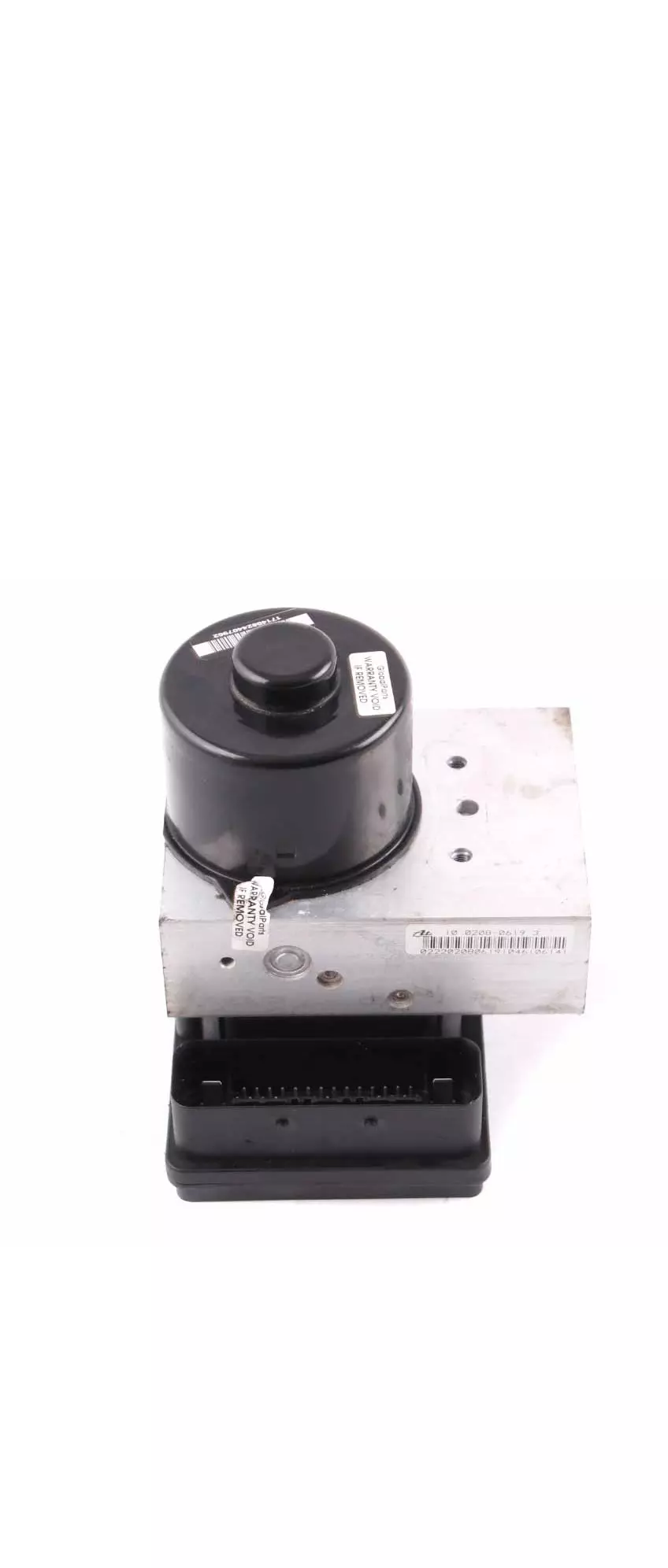
ABS and ESP control modules – key to optimal brake system control
Top-quality ABS and ESP sensors - ensure your driving safety
ABS and ESP systems are advanced driving safety systems that minimize the risk of skidding and loss of vehicle control. ABS (Anti-lock Braking System) prevents wheel lock-up during braking, while ESP (Electronic Stability Program) stabilizes the vehicle when driving in difficult conditions, such as on corners or slippery surfaces. In the Global Parts automotive store, you will find a wide selection of used car parts, including ABS and ESP systems, ideal for brands such as BMW, Audi, Mercedes, Mini, and others.
What is the difference between ABS and ESP?
Although both systems work together, their functions differ. ABS reacts during sudden braking – each of the four brake discs has a dedicated rotational speed sensor that measures whether a wheel has locked up. The ESP system, on the other hand, operates continuously, analyzing data from steering angle, lateral acceleration, and wheel speed sensors. Thanks to this, it can automatically correct the driving path, for example, by slightly braking one wheel. In vehicles such as the BMW E90 or Volkswagen Passat B7, both systems interact within a single ABS/ESP controller, which enables precise reactions in a fraction of a second.
What functions do ABS and ESP systems perform?
ABS and ESP systems play key roles in ensuring driving safety:
- Prevention of wheel lock-up (ABS) – The ABS system allows for full control over the driving direction during intense braking, especially in difficult weather conditions.
- Driving path stabilization (ESP) – ESP automatically corrects the vehicle's path, reducing the risk of side skidding or oversteer.
- Braking force optimization – ABS works with other systems, such as EBD (Electronic Brakeforce Distribution), to optimize brake efficiency.
- Ensuring vehicle stability – ESP reacts to differences in wheel speed, making corrections that help the driver maintain control over the vehicle.
Construction and purpose of the ABS and ESP system
The ABS and ESP system is a hydraulic-electronic assembly most often mounted in the engine compartment, near the brake master cylinder and brake lines. Such a module usually consists of a hydraulic block, a pump, a controller, and electrical connectors that work with sensors at the wheels. The ABS and ESP system is used to control brake fluid pressure and to quickly correct the driving path when the electronics detect skidding or loss of traction.
Comparison of components working with the ABS and ESP system
| Component | Main function | Location | What to check when selecting |
|---|---|---|---|
| ABS/ESP hydraulic pump | Regulates pressure in brake circuits | Engine compartment, near the hydraulic block | OEM number, controller type, number of line outlets, connector type |
| ABS/ESP controller | Processes signals from sensors and controls system operation | On the hydraulic module or as an integrated unit | OEM part number, software compatibility, vehicle version |
| Wheel speed sensor | Reads rotational wheel speed | At the hub or steering knuckle | Sensor type, cable length, mounting side, plug |
| Steering angle sensor / acceleration sensor | Provides data for ESP operation | Steering column or center of the body | Equipment compatibility, calibration, OEM number |
Operating principle and compatibility of ABS sensors
The ABS sensor is most often of the inductive or magnetoresistive type. In models such as the BMW E46, the ABS sensor generates a voltage signal in the range of 0.5–1.5 V, which is read by the control module. In modern cars, active sensors are used, which require 5–12 V power and allow for more precise wheel speed readings. ABS sensor compatibility is crucial – e.g., a BMW E46 ABS sensor will not fit a BMW E90, despite the similarity in construction. At Global Parts, you will find product descriptions with information about the OEM number, hub diameter, and connector type, which facilitates the correct selection of parts.
Why is it worth taking care of the ABS and ESP system?
Damage or malfunction of the ABS and ESP system can lead to problems with safety and driving stability. Typical symptoms of a malfunction include:
- ABS/ESP warning light on the dashboard – May indicate a failure of sensors, the controller, or the pump.
- Extended braking distance – A faulty ABS can reduce braking efficiency on slippery surfaces.
- Loss of stability while driving – An ESP failure can increase the risk of skidding in difficult conditions.
- Brake pedal problems – Resistance or vibrations during braking may indicate a problem with the ABS system. At Global Parts, we offer used ABS and ESP system components that have undergone detailed quality tests, ensuring their durability and reliability.
The role of the hydraulic block and controller in system operation
The ABS/ESP hydraulic block is the part containing fluid flow channels, valves, and a pump responsible for quickly increasing and decreasing braking pressure. The controller refers to the electronic module managing valve operation based on signals from sensors and data from the vehicle bus. In practice, when selecting, the OEM part number, interchangeable numbers, pin layout, module manufacturer, and compatibility with the engine version and vehicle equipment are important.
Table – most common symptoms and possible causes of ABS/ESP system problems
| Symptom | Possible cause | Example component to check |
|---|---|---|
| ABS light stays on | No signal from one sensor | BMW E46 / Passat B7 ABS sensor |
| ESP turns on for no reason | Damaged steering angle sensor | ESP module / Bosch 5.7 controller |
| Brake pedal vibrations | Uneven signal from sensor | Rear wheel active ABS sensor |
| Longer braking distance | ABS pump failure | ATE MK60 ABS pump |
| No communication with module | Corrosion of electrical connector | ABS sensor wiring or ESP controller |
How to choose the right ABS and ESP system components?
When choosing ABS and ESP system components, you should pay attention to several key aspects:
- Matching the vehicle model – Each ABS and ESP system is specific to a given model and drive type. In Global Parts, you will find ABS and ESP system components perfectly matched to BMW, Audi, Mercedes, Mini, and others.
- Technical condition – Used parts, such as sensors, controllers, or pumps, should be free from mechanical and electrical damage.
- System compatibility – Ensure that the selected components work with the other elements of the ABS and ESP system in your vehicle.
Selecting parts by OEM, connector, and vehicle version
The ABS and ESP system requires compatibility not only with the brand but also with the body version, drive type, and electronics configuration. When choosing, it is worth comparing the OEM number, the number of pins in the plug, the layout of hydraulic lines, and the module manufacturer's marking. In the case of parts such as the ABS pump 1ko 614 517 bd, it is crucial to check the compatibility of the hydraulic block and controller with the specific installation version. If you are looking for a subassembly such as a BMW E87 ABS pump, you must verify the part number, electrical connector type, and whether the module works with the appropriate ABS controller. Additionally, it is worth comparing the routing of lines at the module and the mounting location in the engine compartment to avoid differences between pre-facelift and post-facelift versions.
Examples of part matching for popular models
- BMW E46 – ABS sensors are mounted at each wheel, working with the Bosch 5.3 module.
- BMW E90 – Uses the Bosch 8.0 ESP module with DTC (Dynamic Traction Control) function.
- Volkswagen Passat B7 – ATE MK60E ABS system integrated with ESP, compatible with active sensors. Selecting components by VIN or OEM number guarantees full electrical and mechanical compatibility. Global Parts offers the ability to filter parts by brand, year, engine version, and module manufacturer.
Why is it worth choosing used ABS and ESP system components?
Used car parts, such as ABS and ESP system components, are a practical solution that allows for savings while maintaining high quality. By choosing used ABS and ESP system components, you gain:
- Lower costs – Used elements are significantly cheaper than new ones but offer equally high quality.
- Ecology – Recycling car parts supports environmental protection and reduces waste.
- Wide offer – In our store, you will find ABS and ESP system components for many car brands.
How to take care of the ABS and ESP system?
To ensure the ABS and ESP system works reliably for a long time, it is worth following a few rules:
- Regularly check the condition of ABS/ESP sensors and cables to prevent operational problems.
- Change brake fluid according to the manufacturer's recommendations to ensure proper ABS pump operation.
- Monitor any errors on the dashboard and quickly diagnose problems at a workshop.
- If a replacement is needed, at Global Parts you will find suitable used car parts that will restore full functionality to your braking and stabilization system.
Related brake system elements and cooperation diagnostics
The ABS and ESP system works with hydraulic, electrical, and mechanical components of the entire braking assembly. During diagnostics, it is also worth checking the ABS speed sensor, the condition of brake hoses, lines, and connectors, and the correct operation of elements from the brake master cylinders group. When completing a repair for a specific model, e.g., SBC W211, the compatibility of the module with the vehicle installation and the bleeding procedure after installation is also important. Those comparing the operation of the entire system can supplement diagnostics by checking parts from the Brake system and parts section. A useful supplementary material is also the article Fuel system – injectors, pumps, and fuel tank: maintenance and regeneration, which shows how selection by VIN and OEM number facilitates work in other car systems as well.
FAQ
| Question | Answer |
|---|---|
| What is the construction and purpose of the ABS and ESP system? | The ABS and ESP system is a set of hydraulic, electronic, and measurement elements responsible for controlling braking and vehicle stability. A typical set includes a pump or hydraulic block, a controller, wheel speed sensors, and sensors used by the driving path stabilization system. The module is usually mounted in the engine compartment and connected to the car's braking and electrical installation. |
| What is the ABS and ESP system used for? | The ABS and ESP system is used to limit the risk of wheel lock-up during braking and to correct the driving path in situations of traction loss. ABS maintains steerability during heavy braking, and ESP uses signals from sensors and selective wheel braking to stabilize the car. Without a properly functioning system, the driver has less support when driving on slippery surfaces and during sudden maneuvers. |
| What is the construction and function of the ABS/ESP hydraulic block? | The ABS/ESP hydraulic block is a part containing brake fluid flow channels, solenoid valves, and a pump controlling pressure in individual circuits. This element works directly with the controller, which, based on signals from sensors, opens or closes valves at the right moment. In addition to pressure regulation itself, electrical connectors, the layout of line outlets, and compatibility with a specific car version are also important. |
| How to choose the right ABS/ESP module or pump for a car? | It is safest to compare the OEM number, interchangeable numbers, module manufacturer, and electrical connector type. It is also worth checking the body version, drive, equipment, and brake system designation, as visually similar parts may differ in controller configuration. For used parts, comparing photos of mounting points and hydraulic outlets is also helpful. |
| What symptoms indicate a problem with the ABS and ESP system? | The most common symptoms are illuminated ABS or ESP warning lights, errors stored in the controller's memory, incorrect reaction during braking, and sporadic activation of the stabilization system. In practice, the fault may concern a wheel sensor, wiring, the controller, or the hydraulic block itself. In diagnostics, it is also worth verifying power supply, ground, and the condition of plugs. |
| How is the installation and activation of ABS and ESP system components carried out? | Installation requires proper seating of the module, connection of brake lines, and electrical installation according to the factory layout. After replacement, bleeding the system, clearing errors, and adapting or coding the controller are often necessary, depending on the vehicle version. Therefore, before installation, it is worth ensuring that the part has matching markings and corresponds to the car's equipment. |
Summary: ABS and ESP systems in the Global Parts automotive store
ABS and ESP systems are advanced safety systems that ensure stability, braking efficiency, and protection in various road conditions. The Global Parts offer includes used components matched to many vehicle versions of brands such as Mercedes, BMW, Unbranded, and others, taking into account data such as brand, condition, OEM part number, and interchangeable numbers. This method of selection makes it easier to compare the module, pump, or sensor with the equipment of a specific car. We invite you to contact us – we are here to help you! For more information and interesting facts, we also invite you to visit our automotive blog.