


CV Joints, Boots & Parts
Find it faster
Match to your vehicle
GB
Make
Category
Subcategory
Differentials and parts
Condition
In Stock
Price
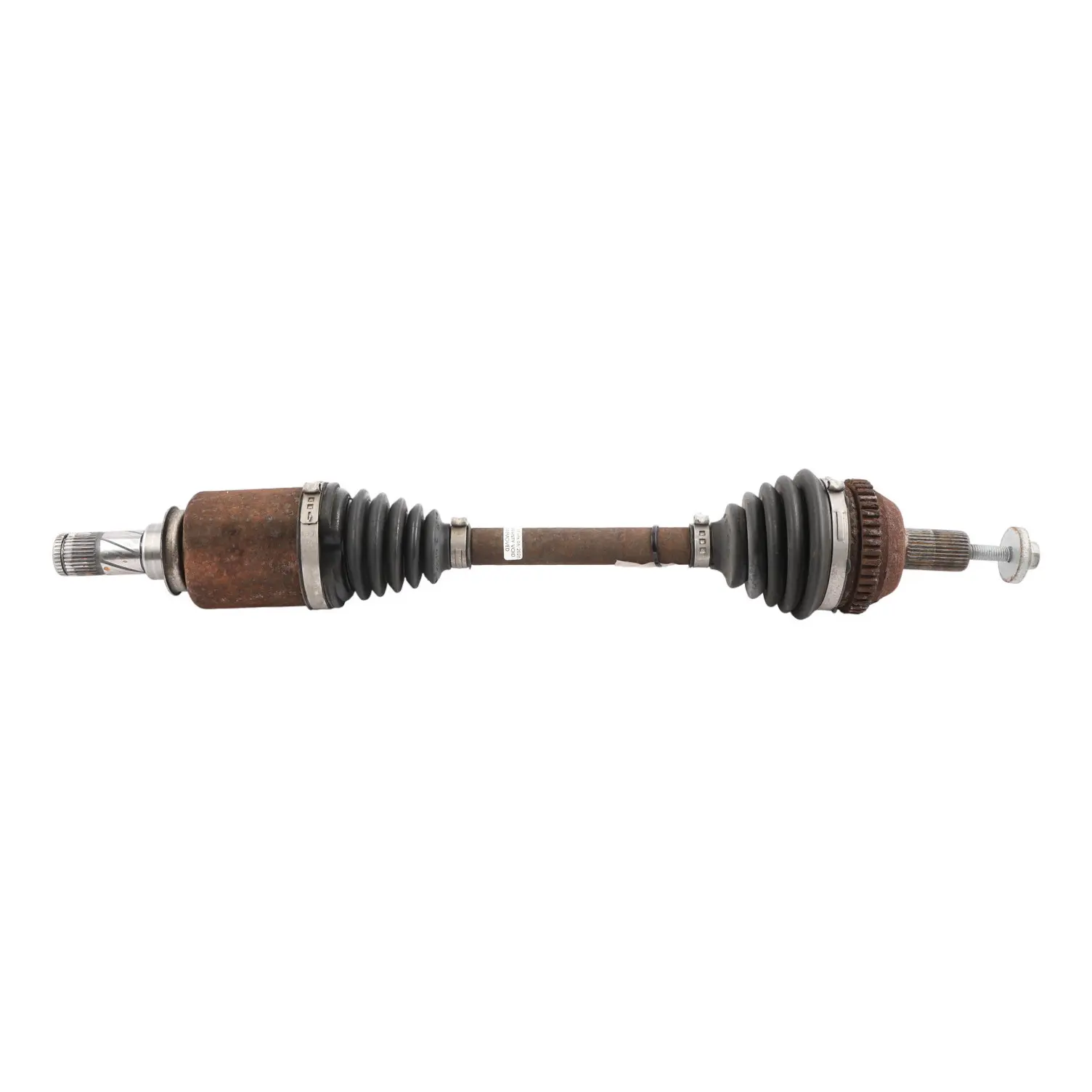
CV Joints, Boots & Parts
In the Global Parts automotive store, you will find a wide selection of used car parts, compatible with BMW and other brands. The driveshaft joints, axle flanges, and parts category includes drivetrain components responsible for torque transmission while maintaining smooth suspension and axle operation. These components are selected primarily based on the OEM number, vehicle placement, drivetrain version, and compatibility with a specific mounting side.
Construction and purpose of driveshaft joints, axle flanges, and parts
Driveshaft joints, axle flanges, and parts are components that connect drivetrain elements in such a way that rotational force can be transferred despite suspension movement and wheel operation. This group includes joints, boots, flanges, rings, mounts, and small parts working with the half-shaft or driveshaft. These elements are installed within the drivetrain, at the axle, hub, or connection with the transmission, depending on the car's design. When choosing an element such as a BMW E46 joint, it is worth comparing the OEM part number, spline type, mounting side, and compatibility with the engine version and transmission type. In practice, these data points are the most decisive factors for correctly matching the part to a specific drivetrain.
Comparison of drivetrain element variants
| Element type | Main function | Typical mounting location | What to check before purchase |
|---|---|---|---|
| Outer joint | Transmits drive to the wheel while suspension angle and steering change | Wheel side, at the hub | OEM number, splines, mounting side, hub compatibility |
| Inner joint | Connects the half-shaft to the transmission or drive mechanism | Transmission or differential side | Connection type, diameter, OEM number, drivetrain version |
| Axle flange | Acts as a connecting element for the half-shaft or joint | At the transmission or axle drive output | Mounting points, seal compatibility, part number |
| Boot and small parts | Protects the joint from dirt and grease loss | On the joint body | Diameters, clamp type, material, compatibility with the specific joint |
Joint operation and impact on drivetrain performance
A driveshaft joint is used to transmit drive between elements that change their position relative to each other during driving. This allows the wheel or half-shaft to operate under load without the system losing smoothness during starting, accelerating, and turning. An axle flange, on the other hand, is a connecting part that stabilizes the assembly and allows for the proper seating of cooperating drivetrain elements. When selecting drivetrain parts, it is worth checking the condition of components such as drive axles, driveshafts, and differentials and parts. Wear in one area often affects the performance of the entire assembly and can be significant when assessing the compatibility of a new component.
Selecting parts by OEM number and mounting location
Selection in this category should be based on comparing the OEM part number, interchangeable numbers, and the exact location on the vehicle. It is not just the make and model that matter, but also the drivetrain version, transmission type, mounting side, and the design of the specific connection. When completing a repair for a specific model, e.g., BMW E90, it is also good to verify factory equipment and axle variants. If you are looking for a component such as a BMW E87 half-shaft flange, you should check the compatibility of mounting points, seating diameter, and cooperation with the seal and joint. Additionally, comparing with elements from the mounting parts and drivetrain brackets group is helpful when the repair involves more than one connection point.
Signs of wear and practical installation tips
Typical signs of wear include knocking during starting, vibrations felt during acceleration, grease leaks from a damaged boot, and noticeable play at the connection. These symptoms do not always indicate damage to the same element, so before ordering, it is worth comparing the dismantled part, OEM number, and mounting method. During installation, the cleanliness of the seat, the condition of mating surfaces, and the correct seating of all securing elements are crucial. In the context of broader car maintenance, it is worth checking out the article Brake calipers under the microscope: How to effectively reduce brake system repair costs by choosing proven recycled parts, which shows how to practically approach the selection of original used parts and compare key technical parameters.
FAQ
| Question | Answer |
|---|---|
| What is the construction and purpose of driveshaft joints, axle flanges, and parts? | Driveshaft joints, axle flanges, and parts are a group of drivetrain elements installed between the half-shaft, driveshaft, hub, or transmission. A typical set consists of a joint body or flange, mating surfaces, fasteners, and securing parts such as boots or rings. Their task is to ensure a proper mechanical connection and effective torque transmission during suspension and drivetrain operation. |
| What are driveshaft joints, axle flanges, and parts used for? | Driveshaft joints, axle flanges, and parts are used to transmit drive between cooperating components that do not remain in a completely fixed position relative to each other. They enable smooth operation of half-shafts and driveshafts during driving, turning, and load changes. Without their proper operation, play, vibrations, noise, and problems with power transmission to the wheels may occur. |
| What is the construction and function of a joint boot? | A joint boot is a flexible protective element mounted on the outer part of the joint or its body. It serves to keep grease inside and protect the mechanism from water, sand, and other contaminants. It works with clamps, and its tightness has a direct impact on the durability of the entire drivetrain connection. |
| How to choose the right element from this category for a car? | The safest way is to compare the OEM part number, interchangeable numbers, and the exact location on the vehicle. You also need to check the mounting side, drivetrain version, transmission type, and connection method with adjacent components. In many cases, comparing the old part with the offered element in terms of mounts and splines is helpful. |
| What symptoms may indicate the need to replace a joint or axle flange? | Most often, these are knocks during starting or turning, vibrations under load, and traces of grease around the boot and drivetrain connections. In the case of axle flanges, play at the connection or leaks at the mating seal may also be significant. Symptoms should be assessed together with the condition of the half-shaft and mounting points. |
| What information in the product offer helps in matching parts? | Data such as make, condition, OEM part number, interchangeable numbers, and vehicle location are most useful. This information facilitates comparing compatibility with a specific car version and the scope of repair. For drivetrain parts, it is also good to pay attention to the mounting side and the connection type with adjacent elements. |
Summary: driveshaft joints, axle flanges, and parts at the Global Parts automotive store
The driveshaft joints, axle flanges, and parts category includes components essential for proper drivetrain transmission, stable axle element connection, and smooth operation of half-shafts and driveshafts. At Global Parts, used car parts are available for many applications, including for BMW vehicles and others, with an emphasis on OEM number compatibility, mounting location, and vehicle version. This selection method makes it easier to match the right element to a specific repair and the scope of work on the drivetrain. Feel free to contact us – we are here to help! For more information and tips, we also invite you to visit our automotive blog.