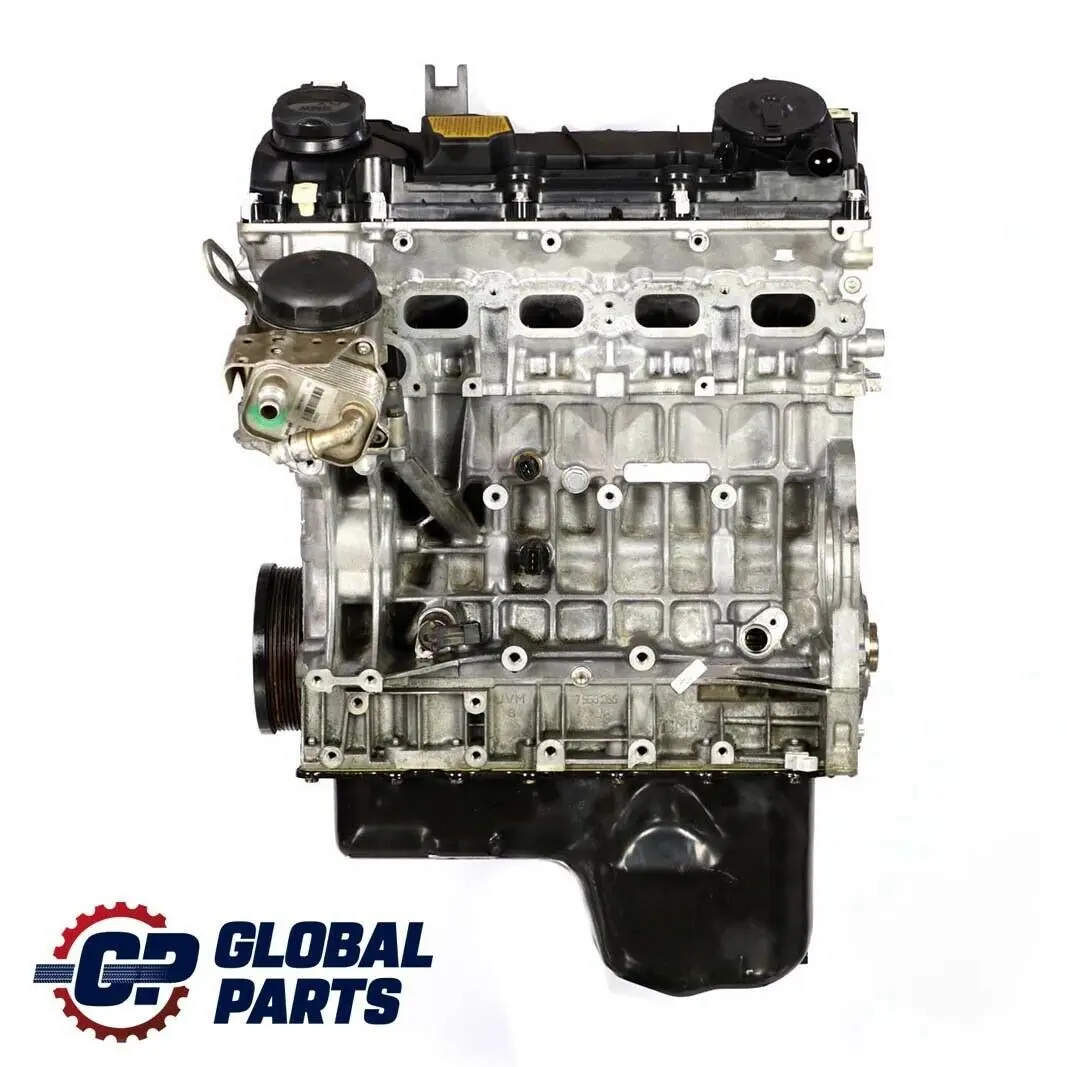
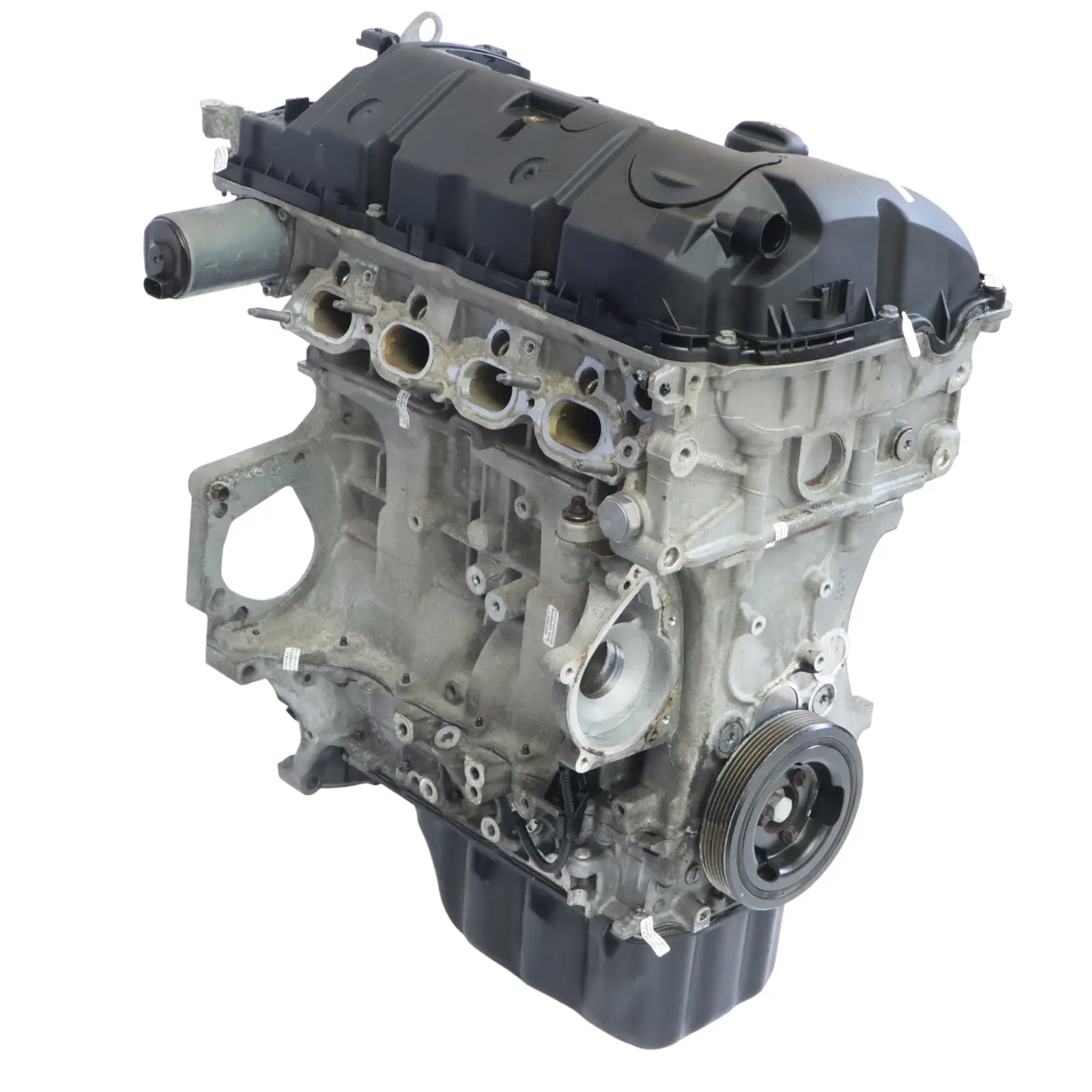
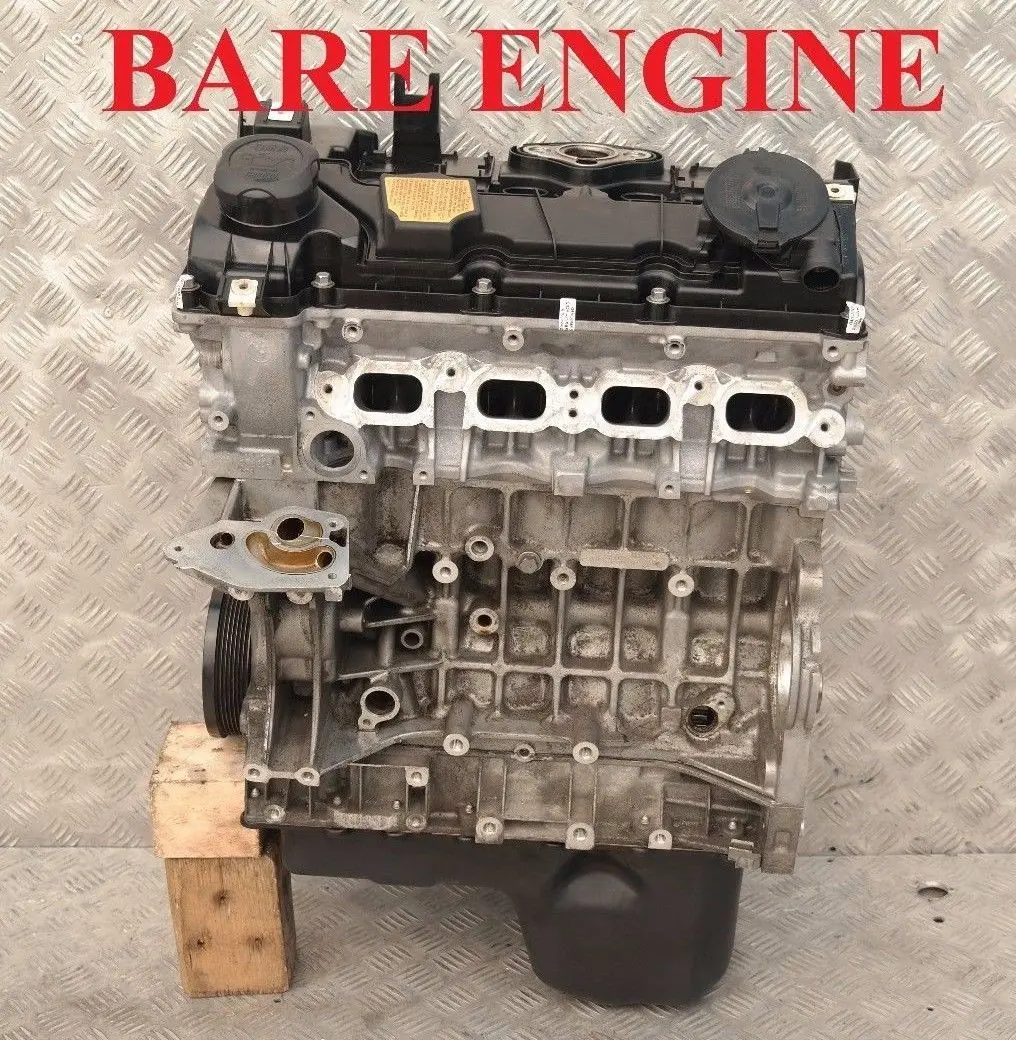
Two seemingly similar engines used They may have different timing, injection systems, and accessories. In the Volkswagen Group, the 1.4 TSI designation doesn't describe a single design, just as the 2.0 TDI designation doesn't clarify whether the engine uses unit injectors or common rail. These differences are crucial for diagnosing faults and selecting repair parts. A well-selected used VAG engine from a dismantling shop can replace a damaged assembly, but sometimes a tested cylinder head, manifold, or other accessory component is sufficient. At Global Parts, you can check component availability and consult on the fit of your chosen model. Comparing engine families helps determine what's truly worth replacing and what shouldn't be purchased based solely on displacement and declared mileage. Contents:
- TSI, TDI and EA designations – how to read an engine comparison?
- Small TSI: What is the difference between EA111 and EA211?
- 1.8 and 2.0 TSI and 2.5 TFSI - what to check before repair?
- 1.9 TDI: why is the engine code more important than the durability legend?
- 2.0 TDI: unit injectors, common rail and various design families
- Volkswagen, Audi, Škoda and SEAT – common families, different versions
- Head, block or entire engine: what is worth buying from dismantling?
- How do I check the condition and compatibility of a used unit?
- What to prepare before installation and first start-up?
- FAQ - VAG group engines and repairs with used parts
TSI, TDI and EA designations – how to read an engine comparison?
A fair comparison of VAG's TSI and TDI engines begins with separating the trade name, design family, and specific version code. In these examples, TSI and TFSI refer to supercharged direct-injection petrol engines, while TDI refers to turbocharged direct-injection diesel engines. Designations like EA111, EA211, EA888, EA189, and EA288 identify design families, not individual replacement engines. A code like AWX or BKD narrows down the identification to a specific variant, but matching accessories still requires comparing the vehicle's component and equipment designations. Popular VAG engines can be found in several brands, in transverse or longitudinal configurations, and with different transmissions. Therefore, even matching displacement and power output does not confirm the transmission capability of the entire set. The VAG group engines presented below comprise six groups useful for repair planning, not a ranking from best to worst. The indicated periods represent an approximate chronology—the introduction and withdrawal of engines depended on the model and market.
| Engine family | Indicative chronology | The most important design difference | What to consider in diagnosis? |
|---|---|---|---|
| 1.2 and 1.4 TSI EA111 | 1.4 TSI from 2005; 1.2 TSI from 2009 | Chain timing; in the 1.4 TSI part turbo and compressor. | Chain and tensioning, cylinder tightness, supercharging operation. |
| 1.2 and 1.4 TSI EA211 | Implemented since 2012 | Timing belt, aluminum block and changed head design. | Service history of the belt, cooling system and supercharging equipment. |
| 1.8 and 2.0 TSI/TFSI EA888 | Since the second half of the 2000s; subsequent generations. | Timing chain; transverse and longitudinal versions. | Generation, lubricant consumption, timing, crankcase ventilation and intake. |
| 1.9 TDI | Popular since the 1990s; PD since the late 1990s. | Distributor pump or unit injectors; timing belt. | Injection type, start-up, cylinder tightness and condition of the unit injector drive in PD. |
| 2.0 TDI | PD since 2003; CR implemented since 2007–2008; EA288 since 2012 | EA188 PD and EA189/EA288 CR; timing belt drive. | Injection, cooling, lubrication, charging and exhaust gas aftertreatment system. |
| 2.5 TFSI EA855 | From 2009; later EA855 evo. | Five cylinders in line, turbocharger and chain timing. | Design version, tuning history, cylinder tightness and condition of accessories. |

Small TSI: What is the difference between EA111 and EA211?
The most important difference for the workshop is the chain timing system in the 1.2 and 1.4 TSI EA111 engines under review, and the belt system in the later EA211 counterparts. These are not two versions of the same engine, identifiable solely by the year of the car. The EA111 family included both pure turbocharged engines and select 1.4 TSI Twincharger engines combining a turbo with a mechanical compressor. The additional boost means different control elements and additional diagnostic points. Chain elongation or tensioning issues may manifest as a metallic noise after starting, but the source of the noise must be confirmed by a mechanic. The later EA211 received a different design, including a timing belt, an aluminum block, and different cylinder head and cooling solutions. Hence the description " VW 1 2 TSI " requires supplementation with the unit code, instead of leading to the purchase of the first visually matching accessory. The considered used 1.4 TSI engine should correspond to the correct family and version, and not just the TSI inscription on the cover.
Why is disassembling the timing belt not a good way to repair a TSI?
A tested engine block can be reused, but a worn timing drive should not be replaced by a properly selected new repair kit. The offer described as " TSI timing chain disassembly " does not confirm the condition of the links, guides, or tensioner. Wear of these components affects the relative position of the crankshaft and camshafts. Repairs require configuration consistent with the documentation and any design changes. The 1.2 TSI uses a different chain width, while the 1.4 TSI has different drive sprocket designs, which excludes accidental assembly. A belt left on a purchased EA211 also requires a service history check and evaluation according to the procedure for a specific code. In the absence of reliable data, the scope of preparation for installation should include proper timing service rather than assuming that all existing parts are ready for further operation. These activities require appropriate locks and tools, and should therefore be performed by a workshop.
1.8 and 2.0 TSI and 2.5 TFSI - what to check before repair?
For the 1.8 and 2.0 TSI/TFSI EA888 family, generation, lubricant consumption history, and timing and accessory condition are key. Opinions about a specific early version should not be extrapolated to all later engines. The EA888 covers several generations, while the older 2.0 TFSIs of the EA113 family are a separate design. Audi service documentation describes increased lubricant consumption in selected 2.0 TFSI EA888s from the 2009–2011 model years, which warrants a thorough history check of the specific unit. If this symptom occurs, diagnostics should separate leaks, crankcase ventilation, turbocharger, and the condition of the piston-cylinder assembly. It's not reasonable to assume that replacing the cylinder head will solve every wear or smoke problem. If the engine is running unevenly, it's also necessary to assess the ignition, fuel supply, and intake system, rather than automatically attributing the symptom to carbon deposits. Proven disassembly equipment is useful when you know which component is damaged and why replacing it should solve the problem.
2.5 TFSI: five cylinders in line, not a V5 layout
The 2.5 TFSI unit of the EA855 family is an in-line five-cylinder design, known from the Audi TT RS and RS 3, among others. A modern turbocharged five-cylinder engine appeared in the TT RS in 2009. The later EA855 evo family brought significant design changes, so the 2.5 TFSI name isn't sufficient for selecting the engine block or all the components. Before purchasing, it's important to determine the exact build quality of the engine and the history of any modifications. A higher declared power output alone doesn't confirm that the internal components meet the production specifications. Such a unit should be assessed by a specialist familiar with the specific design, especially if the component comes from a tuned car.
1.9 TDI: why is the engine code more important than the durability legend?
The 1.9 TDI designation includes both distributor-pump units and later versions with unit injectors. Their hardware and cylinder head design are not a single common set of parts. The ALH example is a distributor pump variant, while the AWX is a 1.9 TDI unit with unit injectors, not the petrol 1.8 TSI. In a unit injector, the pump and injector functions are combined, and pressure is generated by a mechanical drive. This means that when assessing the PD version, the condition of the camshaft and components associated with the injection system are also important. The well-recognized 1.9 TDI engine used should have lubrication, cylinder tightness, boost operation, and starting assessed, without assuming performance based on the model's reputation. 1.9 TDI cylinder head purchased separately requires compatibility with the specific injection variant and appropriate workshop inspection. Equally important is determining whether the required component comes from a longitudinally mounted unit, as in some B5 Passats, or transversely, as in many Golfs.
2.0 TDI: unit injectors, common rail and various design families
PD and CR describe different injection systems: unit injectors and common rail with a shared fuel rail. In the 2.0 TDI, it's also important to distinguish the older EA188 from the CR units of the EA189 and EA288 families. Volkswagen began introducing common rail technology to the B6 Passat in 2008, so the year of manufacture alone doesn't determine the specifics of each model. In the CR, high pressure is generated by a separate pump, and fuel is delivered to the injectors via a common rail. The EA288 family debuted in 2012 and is not merely a newer designation of the unchanged EA189. Differences include thermal management and exhaust gas aftertreatment solutions. Therefore, the 2.0 TDI engine in use requires identification of the family, code, accessories, and application in the specific vehicle. The timing drive of the four-cylinder 2.0 TDI engines in question is belt-driven, although other mechanisms within the engine may have different drive solutions.
Fluid loss in BKD: when is a head really needed?
Coolant loss does not, on its own, confirm a cracked cylinder head, even in engines with a known problem. For the Touran 2.0 TDI BKD from 2003–2007, HELLA recommends checking the circuit for leaks and looking for signs of fluid mixing. Possible causes also include a leaking EGR cooler, a cylinder head gasket, and microcracks in the cylinder head itself. Parts should be purchased after distinguishing between these scenarios. If damage is confirmed, a disassembled 2.0 TDI cylinder head can be considered after identifying the workmanship and examining its condition. An external inspection does not replace a leak test, flatness measurement, and assessment of the cylinder head's components. Before installation, the source of overheating must also be removed if it contributed to the failure.
Volkswagen, Audi, Škoda and SEAT – common families, different versions
Sharing designs across brands expands the possibilities of finding parts. However, it doesn't mean that an engine from any given model will fit all cars with a similar designation. At Volkswagen, the comparison covers, among others, the Golf V-VII, Passat B5-B7, Polo 9N/6R/6C, Touran, Sharan, Caddy, and Transporter T5/T6. At Audi, significant examples include the A3 8P/8V, A4 B6/B7/B8, A6 C5/C6/C7, and TT 8J, although not every generation used every family discussed. At Škoda, similar issues apply to the Octavia 1Z/5E, Superb 3U/3V, Fabia 5J, Yeti, Kodiaq, and Karoq. At SEAT, examples include the Leon 1P/5F, Ibiza 6J, Altea, and Toledo. A common family can make it easier to find a body or component, but requires comparing mounts, connections, and completeness. This model comparison helps broaden your search; it is not a table of engine interchangeability.
Porsche and CUPRA: why can't they be classified as one engine family?
Belonging to a group doesn't mean that all engines in a given brand are designed the same. The Porsche Cayenne with its V6 and V8 engines shouldn't be classified as part of the EA288 family, discussed here using four-cylinder diesels as an example. The Porsche Macan 95B internal combustion engine also comes with various engines, so a specific version designation is needed, not just the phrase "Macan engine." In the CUPRA Leon and Ateca, a good example of common solutions is the 2.0 TSI petrol engine, rather than a general assignment to all TSI and TDI versions. The documented 2018 Ateca variant used a 2.0 TSI with 300 HP. However, the similarity in displacement doesn't confirm compatibility of its equipment with any less powerful engine from the same family.
Head, block or entire engine: what is worth buying from dismantling?
The scope of purchase should correspond to the damage confirmed by the repair shop. Used car parts they allow us to recreate a larger team, but they do not exempt us from assessing all of its cooperating elements.
 If the damage is limited to the cylinder head, and the lower engine remains functional after measurements, there is no basis for automatically ordering a complete unit. A separately purchased 1.4 TSI engine block requires inspection of the cylinder surface, geometry, and compatibility with other parts. A block without accessories is not the same as a column containing a specific crankshaft assembly and head. For a turbocharger, the production number, condition of the rotors, bearings, and control gear are important, not just the similar power of the donor car. Overhauling an existing engine allows for determining the scope of the repair after disassembly and measurements, while replacing it with a used unit requires equally clear information about the condition of the purchased unit. No variant is necessarily the best: completeness, scope of processing, preparation for assembly, and the possibility of performing a final inspection must be compared.
| Part of the disassembly | When can it apply? | Key Risk and Control |
|---|---|---|
| Complete engine or post | When the diagnosis justifies the replacement of a larger unit. | Incomplete history and unclear completeness; need designation, test description and equipment list. |
| Head | When the damage concerns the head and the rest of the unit is suitable for further operation. | Cracks, deformations and wear; leak testing, measurements and assessment of valves and their routing required. |
| Turbocharger | After confirming the failure and determining its cause. | Wear of bearings, rotors and controls; specific design compliance required. |
| Transmission | When its fault was confirmed regardless of the engine problems. | Mechanical and control status unknown; transmission code, test scope, and required post-installation procedures needed. |
| Engine accessories | When the repair can be limited to a specific collector, housing or device. | Visual inspection only; inspection must correspond to the function of the part and include its completeness. |
How do I check the condition and compatibility of a used unit?
Verification should combine the identification of the unit, information about the donor vehicle, and the results of specific inspections. The phrase " low mileage engine " alone does not describe wear or previous operating conditions. Mileage should be linked to the donor's available history, but treated as a piece of information, not a technical inspection result. While the engine is still installed, cold start observations, diagnostics, and inspections after reaching operating temperature are useful. For a disassembled engine, it's important to clearly establish which tests were performed previously and what further checks can be made. Compression measurements and cylinder leak tests answer various questions, and their results should be interpreted by a specialist based on the specific engine's parameters. Signs of flooding, corrosion inside the ports, or unexplained housing damage require additional assessment, not just cleaning before sale. The offer should include a clear label, a description of the condition, a list of included accessories, and information that allows for linking the tests to a specific unit.
Will a Golf engine fit a 2008 Passat or Audi A4?
This cannot be confirmed based on displacement, power, and year of manufacture. When replacing a 2.0 TDI from a Golf VI with a Passat B6, it is necessary to determine, among other things, the injection type, engine code, and equipment compatibility. In the case of a 2008 Audi A4, it is also necessary to identify the generation and longitudinal drivetrain. A transverse engine kit does not, due to its shared designation, become a complete kit for longitudinal installation. Some components of the basic design may share common applications, but this must be confirmed in the catalog. Selection based on the VIN and the installed engine code should also take into account the exhaust gas aftertreatment system. Replacement is not a way to bypass the DPF or other components intended for a given vehicle.
What to prepare before installation and first start-up?
The purchased unit must be installed in a vehicle in which the cause of the previous failure has been addressed. A leak, faulty accessories, or contaminated circuit can also damage the next engine. Before installation, the workshop should assess the intake, cooling, lubrication, and fuel systems and prepare them according to the repair manual. After a turbocharger failure or internal damage to the unit, residual material and contaminants remaining in the lines and heat exchangers are particularly important. New seals, disposable components, and consumables should be used, and the timing belt should be prepared based on its condition and documented history. Replacing the engine's transmission doesn't always require a different controller, but replacing the electronics or some injection components may require configuration, mapping, or adaptation. During disassembly, it's worth assessing the clutch and its connection to the gearbox, but don't automatically consider every functional component as requiring replacement. After startup, tightness and operating parameters should be checked, as a road test is necessary, as simply starting the engine doesn't conclude the repair.
FAQ - VAG group engines and repairs with used parts
The following questions address design differences and the decisions you need to make before purchasing a part. The answer to the compatibility question always refers to the specific vehicle version and component. The TSI or TDI designation describes the technology but does not replace the engine code. The family code also does not identify all the equipment supplied with the used engine. Compared used engines should have both the build and inspection specifications described. When purchasing a cylinder head or block, information about measurements and any machining is also required. The workshop should approve the selected variant before purchase and then re-inspect the delivered unit before installation.
| QUESTION | ANSWER |
|---|---|
| What is the difference between TSI and TDI? | In the engines discussed here, TSI refers to a supercharged gasoline engine with direct injection, while TDI refers to a turbocharged diesel engine with direct injection. The name itself does not define the design family or the full scope of parts used. |
| What do PD and CR mean in TDI engines? | PD stands for unit injector system, while CR stands for common rail: a separate high-pressure pump and a common rail supplying the injectors. These are not interchangeable versions of the same equipment. |
| What is the difference between a used and a remanufactured engine? | A used car has been previously operated, but doesn't necessarily have to have undergone internal repairs. Reconditioning refers to the process of restoring its functionality; before purchasing, it's important to understand the scope of the measurements, repairs, and tests. |
| Will the 2.0 TDI engine from the Golf fit the 2008 Audi A4? | This cannot be confirmed based on displacement and year. We need the A4 generation, unit code, body layout, and confirmation of compatibility of the basic assembly and accessories. |
| Is low mileage enough to consider a used engine good? | No. Mileage must be correlated with the vehicle's history and inspection results. Operating conditions, previous damage, and how the vehicle was prepared for installation are also important. |
| Do I need to replace the timing belt after purchasing the engine? | The decision depends on the design, condition, and documented service history. If the history is unknown, appropriate maintenance should be planned before use; a used belt or chain is not a substitute for a new repair kit. |
| Is the disassembled head suitable for assembly without additional inspection? | This should not be assumed. Workmanship identification, leak testing, and measurements are required, as well as determining the acceptable scope of preparation by a specialized facility. |